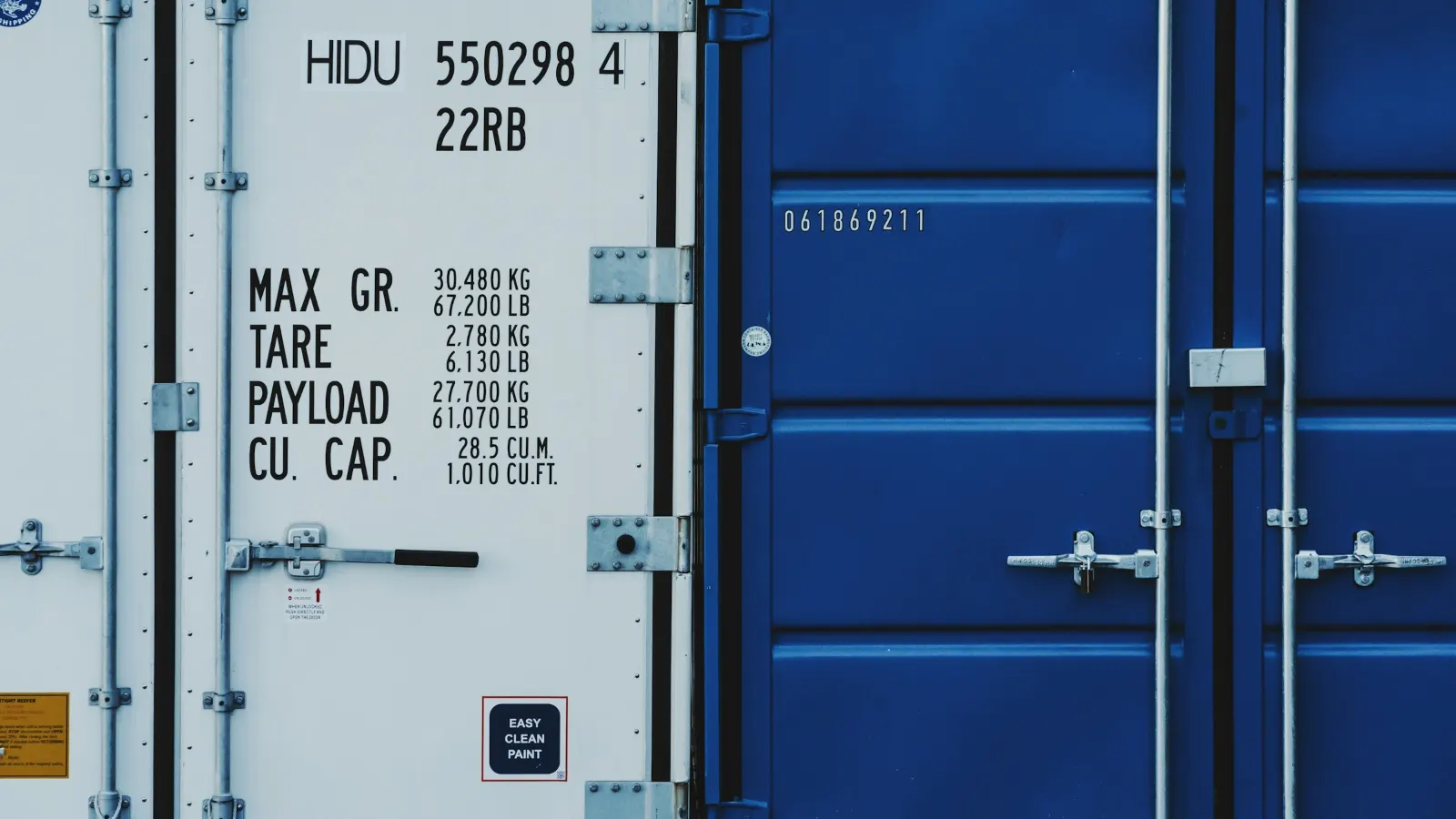




Take a hypothetical case: bagged sugar is loaded on board and damaged during the voyage. The buyer bought CIF and assumed that, because the seller arranged the insurance, the seller carried the loss. Under ordinary performance it did not: delivery and insurance are separate questions.
Short answer: FOB vs CIF. Under both rules, ordinary transit risk passes to the buyer at the same point: when the goods are on board the vessel at the port of shipment. What differs is control and cost. Under FOB (Free on Board) the buyer books and pays the sea freight and decides whether, and how, to insure. Under CIF (Cost, Insurance and Freight) the seller books the freight and must arrange insurance for the buyer, by default at the minimum Institute Cargo Clauses (C) level. CFR (Cost and Freight) is CIF without that insurance obligation. DAP (Delivered at Place) moves delivery and risk to the named destination. For goods handed over in containers before loading, FCA, CPT or CIP usually fit better. ICC Academy, place of delivery and risk transfer ICC, Incoterms® 2020
What the rules do, and what they leave to the contract
The Incoterms® rules are the International Chamber of Commerce's (ICC) standard terms for delivery, allocating tasks, costs and risks between seller and buyer. ICC still presents Incoterms® 2020, in force since 1 January 2020, as the current edition. ICC, Incoterms® rules
The US International Trade Administration (ITA) lists what they do not do: identify the goods or the price, set the method or timing of payment, say when title (ownership) passes, or address all the conditions of a sale. ITA, Know Your Incoterms Those need their own contract terms. Record the agreed rule, named place and edition in the sale contract, and reconcile quotations that disagree.
Eleven rules exist. This guide concentrates on the four that carry much food trade, plus FCA (Free Carrier) and its C-rule counterparts for containers.
Delivery and risk are one point; costs are a list
There is no single place where "everything changes hands". There is a delivery point, where ordinary transit risk passes, and a separate question of how far the seller has contracted and paid for carriage. Under the C rules (CFR and CIF here) the two sit apart deliberately: delivery and risk transfer occur at origin, while the seller pays transport to the named destination. ICC Academy, C rules vs D rules
Costs are a schedule, not a marker. ICC describes the 2020 edition as consolidating all costs for a rule into one article, A9/B9, so users can see the expected costs at a glance. ICC, Incoterms® 2020 Freight, terminal handling, formalities, duties, insurance and unloading are allocated item by item.
FOB and CFR: the same delivery point, different control
Under FOB, risk passes when the goods are on board the vessel nominated by the buyer at the named port of shipment. Under CFR and CIF, it passes when they are on board the vessel contracted by the seller. All three are sea and inland waterway rules. ICC Academy, place of delivery and risk transfer ITA, Know Your Incoterms
An FOB and a CFR price are therefore not prices for the same thing: the CFR figure includes freight the seller procured. What FOB buys is control:
- Routing and transit time, including a direct service for goods with limited shelf life.
- Destination free time, negotiated with the booking, which sets demurrage and detention exposure before the cargo moves (see demurrage and detention explained).
- Visibility of booking confirmations, rollovers and vessel changes at first hand.
The cost is coordination at origin. If the buyer's nominated vessel is late or rolls the cargo, the seller's goods wait, so say in the contract who pays origin storage and re-booking.
Under CFR the buyer inherits the seller's carrier, routing and free time, and the seller has no duty to insure for the buyer, so arrange cover before shipment. ICC Academy, C rules vs D rules
CIF: an insurance obligation, not an insurance outcome
Under CIF the seller must arrange and pay insurance up to the named destination port. ICC states that Institute Cargo Clauses (C) remains the default level of cover for CIF, which is reserved for maritime trade, and that the parties may agree higher cover. Under CIP (Carriage and Insurance Paid To) the 2020 edition requires cover compliant with Institute Cargo Clauses (A). ICC, Incoterms® 2020 ICC Academy's CIP explanation adds that cover must be for at least 110% of the contract price. ICC Academy, CPT and CIP The ICC pages checked give no percentage for CIF, so write the insured value you need into a CIF contract and check it on the certificate.
Clauses (C) cover a short list of named events, such as fire or explosion, stranding, sinking, collision and jettison. They exclude loss caused by delay (clause 4.5). LMA/IUA, Institute Cargo Clauses (C) 2009, insurer-hosted copy For bagged, cartoned or temperature-sensitive food that is a narrow base. Condensation, taint and infestation questions are answered by the policy wording, not by three letters in a quotation.
A CIF obligation therefore does not establish what is covered, that a particular loss will be paid, or that the cover suits the cargo. A buyer has three options: accept (C) and carry the gap; require (A) cover in the contract, at a price; or buy CFR and insure with a policy it has read. How the clause sets compare is covered in marine cargo insurance for food shipments. Before shipment, ask for the certificate wording: insurer, where claims are payable, currency and whether cover runs to your warehouse.
DAP: the seller reaches the destination, the buyer clears it
DAP is available for any mode. The seller delivers, and ordinary risk passes, when the goods are at the buyer's disposal at the named destination, still on the arriving vehicle. The seller has no obligation to insure for the buyer, and does not unload; under DPU (Delivered at Place Unloaded) it does. ICC Academy, DAP and DDP ICC, Incoterms® 2020
The seller handles export and transit formalities; the buyer handles and pays import clearance. The buyer normally pays unloading, unless the seller's carriage contract already includes it. ICC Academy, C rules vs D rules For food, record who provides each import permit and certificate. Loss linked to a missed clearance step or notice needs examination under the complete rule and contract.
Containers: where FOB and CIF stop fitting
ICC Academy notes that a seller of containerised goods typically delivers them to the container terminal, not on board the vessel. ICC Academy, FOB and FAS Under FOB the seller then keeps the risk while the box waits, out of its control. An ICC Academy commentary states that FOB should not normally be used for container shipments, and another that FCA is typically a better choice for containers, even by sea. ICC Academy, Incoterms® 2020 vs 2010 ICC Academy, place of delivery and risk transfer
FCA has two delivery cases. At the seller's premises, delivery occurs once the goods are loaded onto the collecting vehicle; elsewhere, when they are ready for unloading from the seller's arriving vehicle at the carrier's disposal. ICC Academy, FCA and FOB Where the seller should book the main carriage, the same reasoning points to CPT or CIP in place of CFR or CIF; ICC Academy describes CIP as suited to multimodal container transport. ICC Academy, CIP or CIF
FOB persists partly because letters of credit often ask for an on-board bill of lading. Incoterms® 2020 lets the parties agree that the FCA buyer will instruct its carrier to issue one to the seller once the goods are loaded. ICC, Incoterms® 2020 Align rule, transport document and credit before the order (see reading a bill of lading). FOB still suits bulk cargo loaded directly on board, such as grains. ICC Academy, FOB and FAS Container and breakbulk trade-offs are covered in FCL, LCL or breakbulk for food cargo.
Customs value: the rule can change the duty base
The WTO Customs Valuation Agreement lets each importing country include or exclude three costs from customs value: transport to the place of importation, loading, unloading and handling, and insurance. ITA, WTO Customs Valuation Agreement
- European Union: the cost of transport, insurance, loading or handling in delivering the goods to the EU border is added if not already in the price. Irish Revenue, Customs Manual on Valuation, 3.7(a) An FOB price is adjusted upwards.
- United States: international freight and insurance may be excluded from transaction value when they are separately identified. The current customs rule illustrates this with a CIF example that removes ocean freight and insurance from transaction value. eCFR, 19 CFR 152.103 A CIF price therefore needs a documented adjustment rather than an assumption.
Other destinations differ. Confirm the valuation basis with a customs broker before fixing the rule; how it feeds total cost is covered in how packing decisions change the landed price.
Comparison table: four rules, allocated
An original teaching summary of ordinary performance, not a reproduction of the rules or a complete cost list.
| FOB | CFR | CIF | DAP | |
|---|---|---|---|---|
| Transport mode | Sea / inland waterway | Sea / inland waterway | Sea / inland waterway | Any mode |
| Delivery and ordinary risk transfer | On board at named port of shipment | On board at port of shipment | On board at port of shipment | Named destination, ready for unloading |
| Main carriage arranged by | Buyer | Seller, to named destination port | Seller, to named destination port | Seller, to named place |
| Seller must insure for buyer? | No | No | Yes; default (C) cover | No |
| Export / import formalities | Seller / buyer | Seller / buyer | Seller / buyer | Seller / buyer |
| Destination unloading costs | Buyer | Buyer, unless in seller's carriage contract | Buyer, unless in seller's carriage contract | Buyer, unless in seller's carriage contract |
| Container alternative | FCA | CPT | CIP | Already any mode |
| Question it forces | Can you book and manage the voyage? | Do you accept voyage risk on a booking you did not make? | Is default cover the cover this cargo needs? | Can seller delivery and buyer clearance be coordinated? |
Worked example: the same loss under three rules
Hypothetical teaching example. The parties and all figures are invented, in currency units (CU). They are arithmetic, not market data.
One consignment of bagged sugar, loaded on board. Base price including goods, packing, export formalities and on-board delivery: 100,000 CU.
| Quotation basis | Composition | Quoted total |
|---|---|---|
| FOB named port of shipment | 100,000 base | 100,000 CU |
| CFR named destination port | 100,000 + 4,500 freight | 104,500 CU |
| CIF named destination port | 100,000 + 4,500 freight + 380 premium, (C) cover | 104,880 CU |
Under FOB the buyer books freight at 4,800 CU and its own (A) cover for 420 CU: 105,220 CU, or 340 CU more than the CIF quotation. That compares listed items only. Terminal charges, unloading, duties and onward transport are excluded, and the two policies are not equivalent cover.
Now assume accidental damage during the voyage after proper on-board delivery, with no breach or contract amendment.
| FOB | CFR | CIF | |
|---|---|---|---|
| Who arranged carriage | Buyer | Seller | Seller |
| Seller had to insure for buyer | No | No | Yes |
| Ordinary transit risk after loading | Buyer | Buyer | Buyer |
The risk row is identical. CFR or CIF changes who books and pays; it does not move voyage risk back to the seller. Under CIF, any insurance claim runs on the (C) policy the seller placed. Whether a carrier or insurer pays depends on the policy, transport documents and law. Had the sugar been containerised and handed over at a terminal, the sensible step would have been a re-quote on FCA, CPT or CIP.
A selection method and what to write down
Choose by control, not habit:
- Where is the cargo handed to the carrier? A terminal or depot points to FCA, CPT or CIP.
- Who can book and manage the voyage for this cargo?
- Who should specify the insurance, given the product and who carries risk from shipment?
- Can seller delivery and buyer import clearance be coordinated before agreeing DAP?
Then write down, next to the price and payment terms:
- rule, exact port, terminal or place, and edition, for example "CIF [named port of destination] Incoterms® 2020";
- shipment window and how the buyer's vessel or carrier nomination is given;
- who pays origin storage and re-booking if a nominated vessel is late or cargo is rolled;
- under CIF or CIP: clauses, insured value, currency, where cover ends and the documents to be provided;
- under CFR or CIF: carrier, routing, transhipment and destination free time, confirmed before booking;
- the transport document your payment method requires;
- for reefer cargo, set-point and data-logger requirements.
"DAP Nairobi" can mean a warehouse, a yard or an inland terminal; name the point.
Common mistakes
- Assuming CIF means the seller carries the sea risk. Risk passed at loading; the seller bought a policy.
- Using FOB or CIF for containers by habit.
- Accepting CIF without reading the certificate, then finding (C) cover payable abroad.
- Naming a country ("FOB China") instead of a port or terminal.
- Comparing FOB and CIF offers on unit price without freight, insurance and the destination's valuation basis.
Limits and what to recheck
This is an independent explanation, not endorsed by ICC, which owns the Incoterms® trademark and publishes the full rules. It summarises public ICC and ICC Academy material, not the rulebook; ICC Academy articles are practitioner commentary. Parties can vary the rules, and national sale-of-goods law applies. Recheck the edition, the valuation basis with a customs broker, the transport document with your bank and the policy wording with an insurer or broker.
FAQ
Is FOB or CIF better for the buyer? Neither in general. FOB gives the buyer control of freight and insurance. CIF moves the booking to the seller, but the buyer still carries the sea risk. For containers, FCA or CIP usually fits better.
What is the difference between CFR and CIF? The seller's insurance obligation. Under CFR the seller pays freight but need not insure for the buyer; under CIF it must, by default at Institute Cargo Clauses (C).
When does risk pass under CIF? When the goods are on board the vessel at the port of shipment, not when they arrive.
Next step
Before accepting the next quotation, write the rule, exact named place and edition beside the price. Then add four checks: where risk transfers, who books the main carriage, what insurance wording applies and who completes import clearance. Ask the seller to confirm every difference in writing, and have your customs broker test the valuation basis before you compare the offers.
Resources
- International Chamber of Commerce — Incoterms® rules — https://iccwbo.org/business-solutions/incoterms-rules/ (accessed 8 October 2026)
- International Chamber of Commerce — Incoterms® 2020 — https://iccwbo.org/business-solutions/incoterms-rules/incoterms-2020/ (accessed 8 October 2026)
- ICC Academy — Place of delivery and risk transfer in international trade contracts — https://academy.iccwbo.org/incoterms/article/place-of-delivery-risk-transfer-global-trade-contracts/ (accessed 8 October 2026)
- ICC Academy — Incoterms® 2020: "C" or "D" rules? — https://academy.iccwbo.org/incoterms/article/incoterms-2020-c-or-d-rules/ (accessed 23 September 2026)
- ICC Academy — FCA and FOB Incoterms® 2020 — https://academy.iccwbo.org/incoterms/article/incoterms-2020-fca-or-fob/ (accessed 23 September 2026)
- ICC Academy — FOB and FAS Incoterms® 2020 explained — https://academy.iccwbo.org/incoterms/article/incoterms-2020-fas-or-fob/ (accessed 23 September 2026)
- ICC Academy — CPT and CIP Incoterms® 2020 explained — https://academy.iccwbo.org/incoterms/article/incoterms-2020-cpt-or-cip/ (accessed 8 October 2026)
- ICC Academy — CIP or CIF — https://academy.iccwbo.org/incoterms/article/incoterms-2020-cip-or-cif/ (accessed 23 September 2026)
- ICC Academy — DAP and DDP Incoterms® 2020 — https://academy.iccwbo.org/incoterms/article/incoterms-2020-dap-or-ddp/ (accessed 23 September 2026)
- ICC Academy — Incoterms® 2020 vs 2010: What's changed? — https://academy.iccwbo.org/incoterms/article/incoterms-2020-vs-2010-whats-changed/ (accessed 8 October 2026)
- US International Trade Administration — Know Your Incoterms — https://www.trade.gov/know-your-incoterms (accessed 8 October 2026)
- US International Trade Administration — Trade Guide: WTO Customs Valuation Agreement — https://www.trade.gov/trade-guide-customs-valuation (accessed 8 October 2026)
- Irish Revenue Commissioners — Customs Manual on Valuation — https://www.revenue.ie/en/tax-professionals/tdm/customs/valuation/valuation.pdf (accessed 8 October 2026)
- Electronic Code of Federal Regulations — 19 CFR 152.103, Transaction value — https://www.ecfr.gov/current/title-19/chapter-I/part-152/subpart-E/section-152.103 (accessed 8 October 2026)
- Lloyd's Market Association and International Underwriting Association — Institute Cargo Clauses (C) CL384, 1/1/2009 (copy hosted by If P&C Insurance) — https://www.if-insurance.com/globalassets/industrial/files/marine-cargo/institute-clauses/institute-cargo-clauses-c-2009.pdf (accessed 23 September 2026)